Category: Jobseekers, Employers, Interview
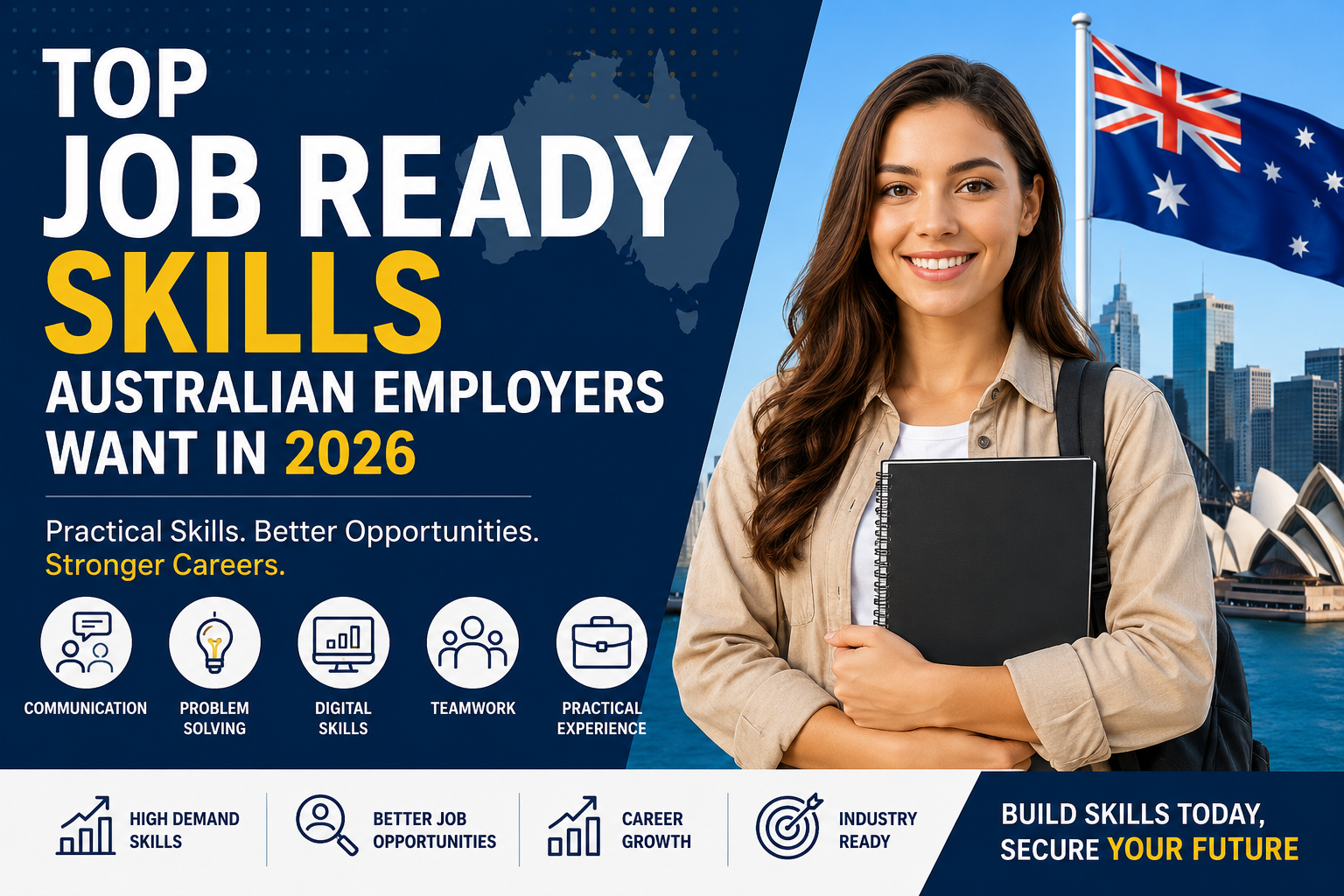
Top Job Ready Skills Australian Employers Want in 2026
The Australian job market is changing rapidly. Employers are no longer hiring candidates based only on academic qualifications or degrees. Companies now prefer candidates who can contribute immediately with practical skills, workplace understanding, and real-world experience.
In 2026, job readiness has become one of the biggest factors influencing career growth, employability, and hiring decisions across Australia.
According to hiring industry reports, many businesses are increasingly using AI-driven recruitment systems and skills-based hiring strategies to shortlist candidates faster and reduce recruitment costs. This has changed how employers evaluate resumes and applications.
Why Hiring Trends Are Changing in Australia
Several major factors are reshaping the Australian job market.
Businesses are adopting AI tools, automation systems, and digital technologies to improve productivity and reduce operational expenses. At the same time, economic pressure and increased competition have made employers more selective during recruitment.
Companies are also receiving significantly higher numbers of applications for every role.
Additionally, AI-powered Applicant Tracking Systems (ATS) are filtering resumes before recruiters manually review applications. Studies suggest that nearly 70% to 75% of resumes may never reach human recruiters because automated systems reject applications that are not properly optimised for modern hiring processes.
As a result, candidates who only rely on academic qualifications often struggle to secure interviews and job opportunities.
What Are Job Ready Skills?
Job ready skills are practical workplace abilities that help candidates perform effectively in professional environments.
These skills include communication, teamwork, problem-solving, technical knowledge, digital skills, workplace adaptability, and practical industry experience.
Employers prefer candidates who can quickly adjust to workplace expectations and contribute without requiring extensive training.
Most In-Demand Job Ready Skills in 2026
Communication and Teamwork Skills
Strong communication skills help employees work effectively with colleagues, managers, and clients in professional environments.
Employers value candidates who can confidently communicate ideas, solve workplace issues, and collaborate within teams.
Problem-Solving and Critical Thinking
Modern workplaces require employees who can analyse challenges, think critically, and make practical decisions under pressure.
Problem-solving abilities are becoming increasingly important across industries affected by rapid technological change.
Technical and Digital Skills
Digital transformation has increased demand for candidates with technical knowledge and software experience.
Employers now expect candidates to understand tools such as:
- Microsoft Excel
- CRM platforms
- Analytics tools
- Project management systems
- Digital communication platforms
Technical adaptability is becoming essential in both office-based and remote work environments.
Resume and Interview Preparation
A strong resume and confident interview performance significantly improve hiring opportunities.
Candidates who understand ATS resume optimisation, professional communication, and interview preparation often perform better during recruitment processes.
Practical Experience and Industry Exposure
Internships, freelance projects, volunteer work, and practical learning experiences help candidates develop workplace confidence and industry understanding.
Employers prefer candidates who can demonstrate real-world application of skills instead of only theoretical knowledge.
Why Employers Prefer Job Ready Candidates
Hiring and training employees requires time, resources, and financial investment.
Companies prefer job ready candidates because they usually demonstrate:
- Better workplace communication
- Faster learning ability
- Practical industry knowledge
- Understanding of workplace systems
- Stronger confidence during interviews
- Real-world project experience
This reduces onboarding time and allows businesses to improve productivity more quickly.
Common Mistakes Candidates Make
Many students and graduates still focus only on completing courses or collecting certificates without building practical workplace skills.
Some common mistakes include:
- Ignoring internships and project opportunities
- Using the same resume for every application
- Not improving communication skills
- Avoiding industry software and workplace tools
- Depending only on academic scores
- Not building LinkedIn profiles or professional portfolios
In today’s competitive hiring market, employers want evidence of skill application, not just qualifications.
How Candidates Can Become More Job Ready
Improving employability requires consistent practical learning and career preparation.
Some effective ways include:
- Building real projects related to your industry
- Completing internships or volunteer opportunities
- Learning industry-relevant software and digital tools
- Improving resume writing and interview preparation
- Developing communication and teamwork skills
- Staying updated with hiring trends and workplace technologies
- Creating professional LinkedIn profiles and portfolios
Even small practical experiences can create major advantages during recruitment.
How Job Ready Placements Australia Supports Candidates
Job Ready Placements Australia focuses on helping candidates become more employable through practical preparation and career support.
This includes:
- Skill-focused learning programs
- Career guidance and employability support
- Practical exposure opportunities
- Resume and interview preparation assistance
- Industry-oriented training
- Placement support for candidates
The goal is to help candidates bridge the gap between education and real workplace expectations.
Conclusion
The Australian job market is becoming increasingly skill-focused and performance-driven. Degrees alone are no longer enough to guarantee career success.
Candidates who focus on practical skills, industry exposure, communication abilities, and workplace readiness will continue to stay competitive in evolving industries.
Career growth today depends on how effectively candidates can apply their knowledge in real workplace situations. The earlier professionals begin building job ready skills, the stronger their future opportunities become.
Sources
- https://www.techradar.com/pro/75-of-resumes-never-reach-a-human-heres-the-hidden-reason-your-application-is-getting-rejected-by-ai
- https://www.linkedin.com/business/talent/blog/talent-strategy/skills-based-hiring
- https://www.jobsandskills.gov.au/data/labour-market-insights
- https://www.jobscan.co/blog/ats-resume/
- https://www.businessinsider.com/job-seeker-landed-role-from-reddit-hack-find-recruiter-email-2026-4
#JobReadySkills #AustraliaJobs #EmployabilitySkills #CareerGrowth #SkillsBasedHiring #ATSResume #AustraliaJobMarket #GraduateJobsAustralia #AIHiring #FutureOfWork #InterviewPreparation #WorkplaceSkills #CareerDevelopment #ProfessionalGrowth #IndustryReadyCandidates