Category: Jobseekers, Employers, Interview
How Students Can Build a Job-Ready Portfolio Without Work Experience in Australia
Many students believe they cannot create a strong professional profile until they have completed an internship or secured their first job. This is not true. Students already develop useful skills through assignments, group projects, presentations, volunteering, short courses, personal projects and part-time responsibilities — the real challenge is presenting these experiences in a way that helps an employer understand what the student can actually do.
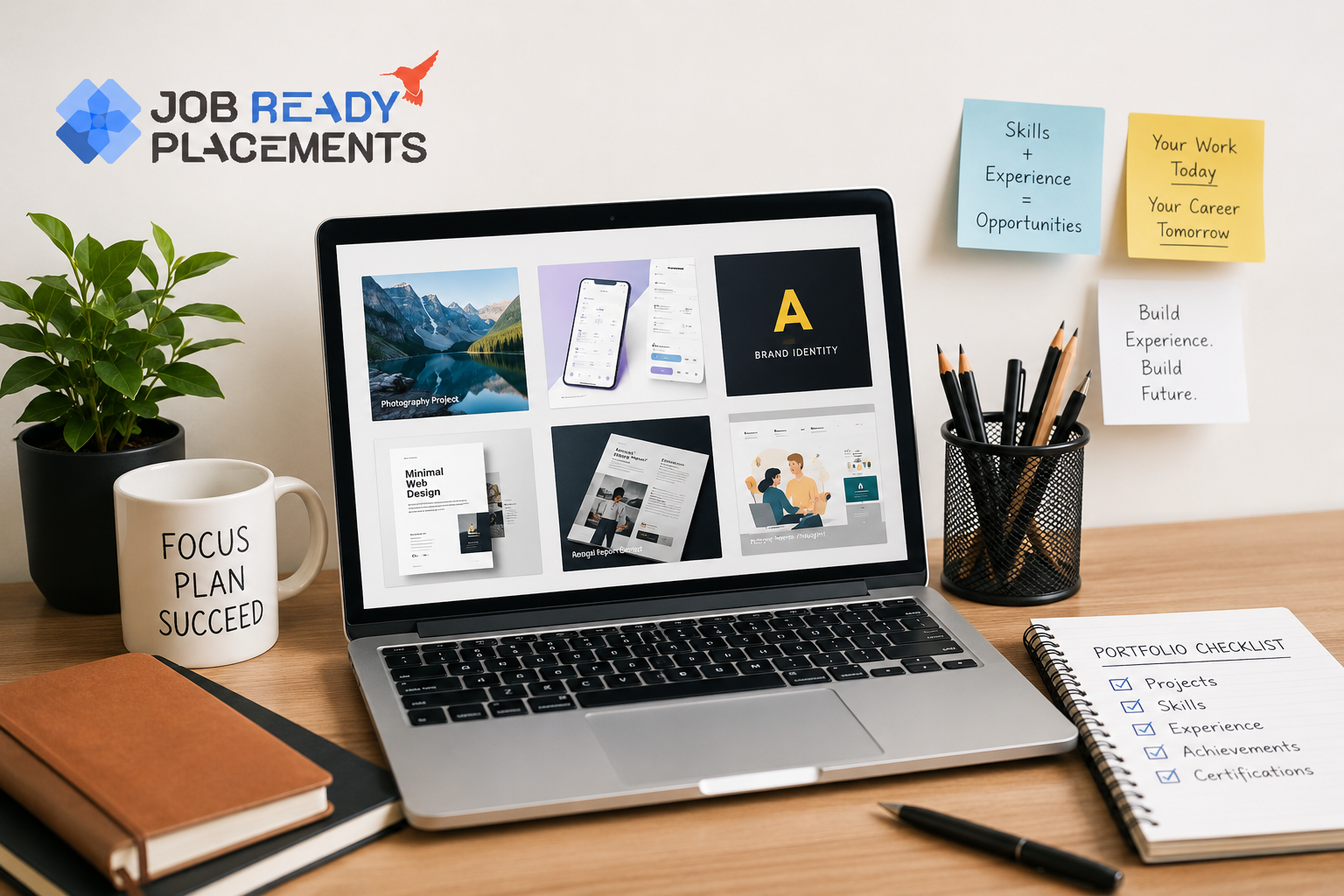
A job-ready portfolio allows students to collect practical evidence of their skills in one place. Instead of simply claiming communication, research, design, technical or problem-solving abilities, students can show real examples of how they have applied them. And a portfolio is not limited to graphic designers or other creative professionals — students studying business, IT, engineering, accounting, marketing, education, hospitality and community services can all build portfolios relevant to their target roles. Monash University describes an ePortfolio as an online collection that allows students to demonstrate skill development, reflect on their progress and gather evidence of learning, which may include text, images, videos, documents and links.
A portfolio can take many forms — a simple PDF, a personal website, a LinkedIn Featured section, an organised Google Drive folder, a GitHub profile for technical work, or a short presentation of selected projects. The point isn't to include everything a student has ever made, but to show three to five examples that speak directly to the job, internship or placement they're aiming for.
Resume Tells, Portfolio Shows
A resume summarises a candidate's education, skills and achievements. A portfolio provides the supporting evidence behind those claims. Where a resume might simply state that a student completed a market research project, the portfolio can show the research objective, methodology, sample analysis, key findings and the student's individual contribution. The two should work together: the resume gives the summary, the portfolio gives the proof.
Get the Direction Right First
Before building anything, students should identify the type of role they want to pursue. A portfolio built for every possible industry becomes confusing, while a targeted one is far easier for an employer to read. A useful starting exercise: review a handful of suitable job ads and note which skills keep coming up — data analysis, customer communication, teamwork, content creation, technical software. That list becomes the filter for what goes into the portfolio. It doesn't need to prove the student can already do the entire job; it needs to show relevant foundations, initiative and willingness to learn.
Open With a Short Introduction
The first section should briefly explain who the student is and what they're looking for — current qualification, target industry, two or three strengths, and the main tools they work with.
"I am a final-year business student interested in entry-level marketing and customer engagement roles. My university projects have helped me develop skills in market research, campaign planning and data analysis."
Keep it short. The employer should understand the candidate's direction within a few lines.
Build Each Project as a Mini Case Study
Rather than uploading an assignment as-is, each project should walk through the situation, the student's contribution and the outcome — the objective, the actions taken, the tools or methods used, the individual contribution (especially for group work), the result, the skills demonstrated and what the student learned. This is what turns a class assignment into genuine evidence of workplace-relevant ability, and it applies whether the source material is a marketing assignment turned into a campaign proposal, a spreadsheet task turned into a financial dashboard, or a coding assignment turned into a working application. Confidential information, personal data and copyrighted material should always be stripped out before anything goes public.
Match the Evidence to the Industry
Business and administration students can lean on process maps, business plans and project schedules. Marketing students can show social media calendars, campaign concepts and performance reports. IT students can present websites, dashboards, database designs and GitHub repositories. Accounting students can include budgeting exercises and financial analysis built on fictional or publicly available data. Engineering students can bring in CAD designs, technical drawings and project plans, while hospitality and retail students can show service-improvement ideas, customer journey maps and event plans. Monash University's own ePortfolio examples span engineering designs, teaching materials, scientific reports and creative work — proof of how adaptable the format really is.
Don't Overlook Part-Time and Casual Work
A retail, hospitality, warehouse or customer service job may feel unrelated to a student's target career, but it still demonstrates reliability, punctuality, teamwork, time management, conflict resolution and the ability to work under pressure. The trick is framing it around a specific situation — a problem solved, a customer supported, a process improved — rather than just the job title. Internships, volunteering and university projects count just as much. More on how these experiences add up is covered on the Job Ready Placements insights page.
Certificates: Show the Application, Not Just the Badge
A portfolio shouldn't turn into a wall of certificate screenshots. It's far more convincing to show what was done with the training:
"After completing an Excel course, I created a sales dashboard using pivot tables, formulas and charts."
That one line does more work than the certificate alone ever could.
LinkedIn Can Double as a Portfolio
Students who don't want to build a separate website can lean on LinkedIn's Featured section — project presentations, reports, articles, certificates, website links, videos and GitHub projects all fit there, alongside relevant coursework and technical skills in the main profile sections.
Design for Readability, Not Decoration
Clear headings, consistent fonts, short paragraphs, working links and correct spelling matter far more than fancy graphics. Match the tone to the industry — clean and structured for accounting or admin, a bit more visual for marketing or design — but readability wins over decoration every time. Students don't need to rebuild the whole portfolio per application either; reordering projects so the most relevant one leads is usually enough.
Common mistakes worth avoiding: uploading assignments with zero context, broken links, confidential information left in, claiming credit for group work someone else did, and recycling one generic portfolio for every role regardless of fit. A quick review from a teacher, mentor or career adviser before sending it out is always worth the extra day.
Where Job Ready Placements Fits In
A portfolio is one piece of becoming employment-ready — students still need to find the right opportunities, tailor their resume and prepare for interviews. Job Ready Placements helps students and graduates explore jobs, internships and placement opportunities across Australia, with practical career insights on what employers actually expect. Students can build a profile on the platform and use their portfolio as stronger proof of capability when applying.
Final Thoughts
Not having formal work experience doesn't mean a student has nothing to show. University assignments, personal projects, volunteering, part-time work and certificates can all serve as evidence of practical ability — the key is choosing the right examples and explaining them well. One strong project, built out and refined over time, is enough to start making applications feel more credible and memorable.
Sources and References
LinkedIn explains how projects and work samples can be displayed in the Featured section.
https://www.linkedin.com/help/linkedin/answer/a550399/manage-featured-samples-of-your-work-on-your-linkedin-profile
Australian Government explains how internships and work placements improve student employability.
https://www.education.gov.au/international-education/during-your-studies-australia
Jobs and Skills Australia outlines the skills and experience employers consider when hiring young applicants.
https://www.jobsandskills.gov.au/data/recruitment-experiences-and-outlook-survey/research-articles/employers-experiences-young-job-applicants
Fair Work Ombudsman explains Australian work experience and internship arrangements.
https://www.fairwork.gov.au/starting-employment/unpaid-work/work-experience-and-internships
Job Ready Placements explains how students can gain practical experience before their first job.
https://www.jobreadyplacements.com.au/insight/how-students-can-gain-work-experience-before-first-job
Job Ready Placements explains the job-ready skills students should develop before applying.
https://jobreadyplacements.com.au/insight/from-campus-to-global-careers-job-ready-skills-students-need-before-applying