Category: Jobseekers, Employers, Interview
The Best Career Strategy to Stay Job Ready in 2026
The global job market is becoming more competitive than ever. AI-driven automation, economic uncertainty, and changing business priorities are forcing companies to hire more selectively.
In 2026, employers are no longer hiring candidates based only on qualifications. Companies now prefer professionals who can contribute immediately with practical skills, industry knowledge, and real-world experience.
This shift is changing how students, graduates, and professionals must prepare for their careers.
Candidates who stay job ready will continue to find better opportunities, while those who rely only on degrees may struggle in a highly competitive hiring market.
Why the Job Market Is Becoming More Competitive
Modern hiring trends are being reshaped by technology, automation, and global workforce changes.
AI and Automation Are Reshaping Hiring
Artificial Intelligence and automation tools are replacing repetitive tasks across industries such as administration, customer support, marketing, and data processing.
According to reports from The Guardian and Business Insider, companies are increasingly investing in AI-powered systems to improve efficiency while reducing operational costs.
As a result, employers now prefer candidates who understand modern digital tools and can work effectively in technology-driven workplaces.
Employers Expect Immediate Productivity
Businesses want employees who are ready to perform from day one with minimal training.
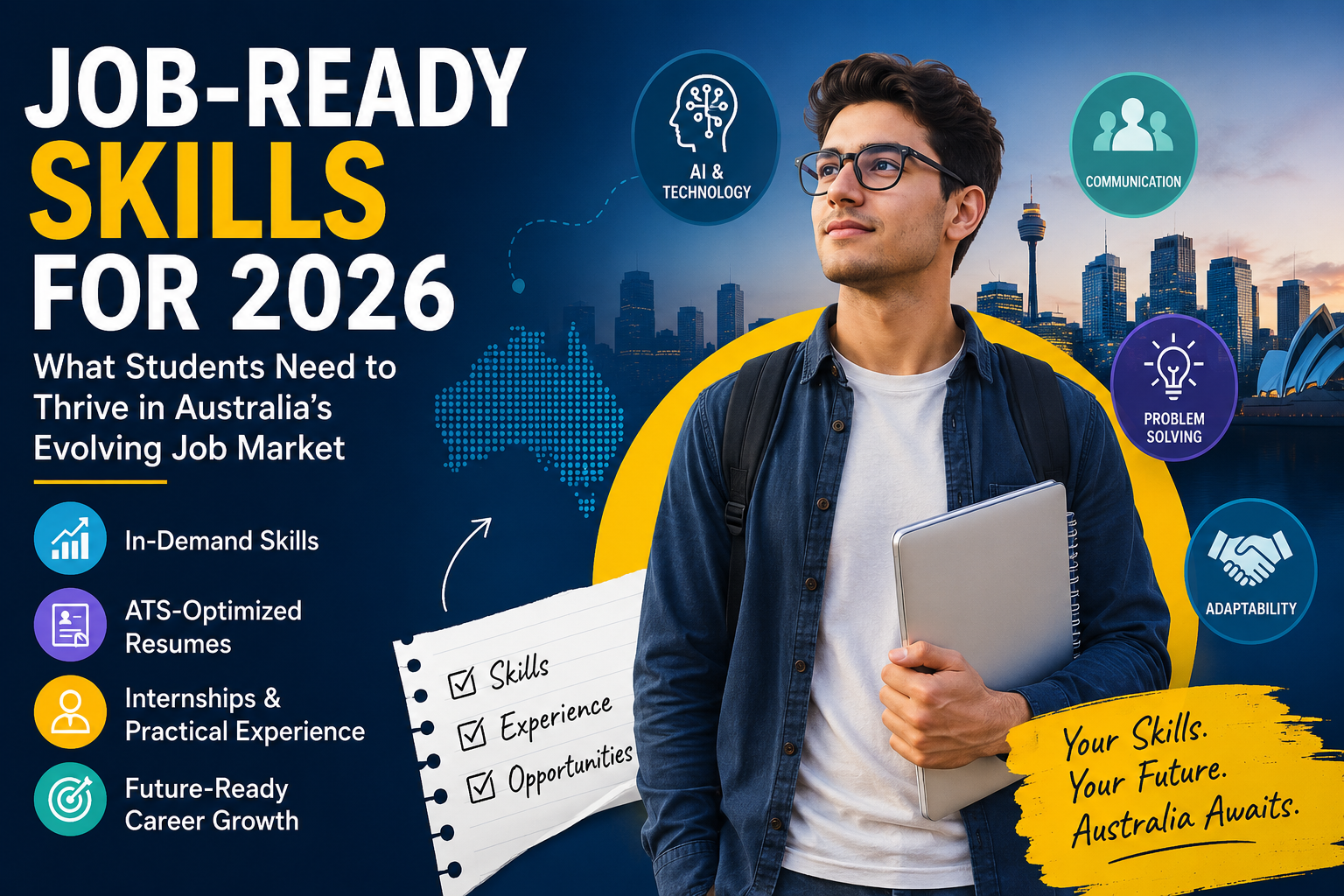
Recruiters now focus heavily on candidates who can demonstrate:
- Practical industry skills that can be applied immediately in workplace environments
- Strong communication, teamwork, and problem-solving abilities in professional settings
- Internship experience, freelance projects, or portfolio-based practical work
- ATS-friendly resumes that clearly highlight skills, achievements, and experience
- Adaptability to AI tools, digital systems, and modern workplace technologies
The hiring process is becoming more performance-based than qualification-based.
What Does “Job Ready” Actually Mean?
A job ready candidate is someone who possesses practical skills, workplace readiness, and industry exposure required by modern employers.
Being job ready is not only about education. It is about proving the ability to solve problems, communicate professionally, and contribute effectively in real business environments.
A job ready candidate usually demonstrates:
- The ability to handle workplace responsibilities using practical knowledge and skills
- Experience working on internships, projects, or industry-related assignments
- Understanding of workplace software, communication tools, and business workflows
- Professional behavior, teamwork, time management, and communication abilities
- A proactive attitude toward learning new technologies and improving skills continuously
Candidates who demonstrate these qualities often stand out during recruitment.
Why Degrees Alone Are No Longer Enough
Degrees still matter, but employers now consider them as the foundation rather than the final requirement.
Thousands of graduates apply for the same roles every day. What separates successful candidates is their ability to demonstrate real-world capability beyond academic performance.
Many graduates struggle because they:
- Focus mainly on theoretical education without gaining practical industry exposure
- Build resumes with qualifications but lack real-world experience and achievements
- Have no internships, project work, or professional portfolio to showcase
- Are unfamiliar with workplace tools and systems used by employers
- Depend only on academic performance while ignoring skill development opportunities
This growing gap between education and employability is becoming a major challenge worldwide.
The Best Career Strategy to Stay Competitive
To remain employable in today’s market, candidates must focus on continuous learning and practical skill development.
1. Build Practical Job Ready Skills
Candidates should focus on learning skills that are actively used in workplaces rather than relying only on theoretical knowledge.
Examples of valuable job ready skills include:
- Excel reporting, business analytics, and data management skills used in workplaces
- Digital marketing knowledge including SEO, social media, and content management
- Coding, GitHub projects, and technical problem-solving abilities for IT careers
- CRM systems and workflow software commonly used in sales and support roles
- Communication and teamwork skills required for office and remote work environments
Practical skills improve employability and help candidates adapt faster to workplace expectations.
2. Gain Real Experience Early
Internships, freelance work, volunteer roles, and practical projects help candidates understand industry expectations and improve workplace confidence.
Even small projects can strengthen resumes and improve interview performance.
Practical exposure helps candidates:
- Improve workplace communication
- Understand business workflows
- Develop teamwork and leadership skills
- Solve real-world business challenges
Employers value experience because it reduces onboarding time and training costs.
3. Create an ATS Optimized Resume
Modern recruitment systems often use Applicant Tracking Systems (ATS) to filter resumes before recruiters review them.
According to TechRadar Pro, nearly 75% of resumes are filtered through ATS systems during hiring processes.
A strong ATS-friendly resume should:
- Include industry-relevant keywords
- Highlight measurable achievements
- Showcase practical and technical skills clearly
- Present experience in a professional structure
Generic resumes are often rejected automatically before reaching recruiters.
4. Build a Professional Online Presence
Recruiters increasingly review online profiles before scheduling interviews.
Candidates should maintain:
- Updated LinkedIn profiles
- Professional portfolios or project showcases
- Industry certifications with practical value
- Professional networking activity related to their career field
A strong online presence improves credibility and visibility during recruitment.
The Role of Job Readiness Platforms
Modern job readiness platforms help bridge the gap between education and employment.
Platforms like Job Ready Placements focus on improving employability through practical training, career preparation, and industry-focused support.
Job readiness platforms often help candidates with:
- Industry-focused training programs aligned with current hiring requirements
- Resume building support designed for ATS recruitment systems
- Internship opportunities and project exposure for practical experience
- Interview preparation sessions that improve confidence and communication skills
- Career guidance and employer connections that improve hiring opportunities
The goal is not only qualification but long-term employability.
Why Employers Prefer Job Ready Candidates
For employers, hiring unprepared candidates increases:
- Training expenses
- Productivity delays
- Hiring risks
- Employee turnover
Job ready professionals contribute faster, adapt more efficiently, and require less supervision.
This is why companies increasingly prioritize candidates with practical exposure and industry-ready skills.
Future Job Market Trends in 2026
According to LinkedIn Workforce Reports and World Economic Forum research, the fastest-growing hiring trends include:
- AI and digital literacy skills
- Communication and leadership abilities
- Data analysis and business intelligence
- Adaptability and problem-solving skills
- Technology-driven workplace collaboration
Candidates who continuously improve these skills will remain competitive in future hiring markets.
Sources
https://www.abs.gov.au/statistics/labour/employment-and-unemployment/labour-force-australia
https://www.jobsandskills.gov.au/data/occupation-and-industry-profiles
https://www.linkedin.com/business/talent/blog/talent-strategy/skills-based-hiring
https://www.jobscan.co/blog/ats-resume/
https://au.prosple.com/career-planning/internships-in-australia