Category: Jobseekers, Employers, Interview
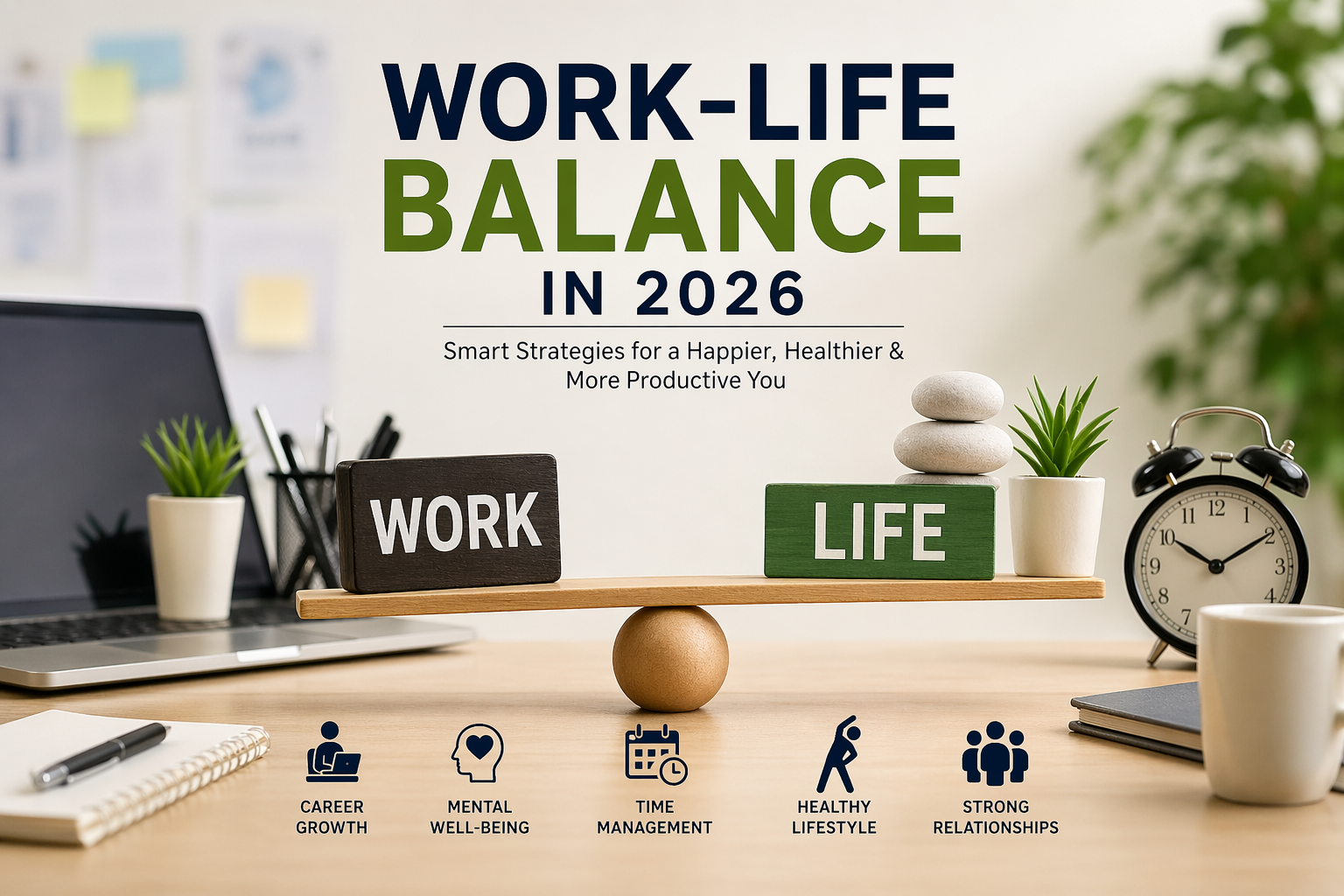
Work-Life Balance in 2026: Smart Strategies for Employees, Students & Employers
In 2026, work is no longer limited to office hours. With remote jobs, hybrid workplaces, and constant digital connectivity, the line between work and personal life is becoming increasingly blurred. As a result, stress, burnout, and mental fatigue are rising globally.
Whether you are a student preparing for your career, a job seeker trying to stay competitive, or an employer managing teams, maintaining a healthy work-life balance is no longer optional — it is essential.
This guide explores practical strategies that help you stay productive while protecting your well-being.
What is Work-Life Balance in 2026?
Work-life balance today is not just about working fewer hours. It is about:
- Managing time effectively between work, study, and personal life
- Staying mentally and physically healthy
- Avoiding burnout while maintaining productivity
- Creating boundaries in a digitally connected world
In simple terms, it means working smarter, not constantly.
Why Work-Life Balance is Becoming a Global Priority
Rising Burnout Levels
Long working hours and constant pressure are leading to mental exhaustion, reduced focus, and health issues. Companies now recognize that burnout directly affects productivity and retention.
Remote Work Challenges
Remote work offers flexibility but blurs the line between work and personal life. Many struggle to disconnect, leading to longer hours and less time to recharge.
Increased Competition
Students and job seekers face constant pressure to upskill and stay competitive, often at the cost of their well-being.
Employer Expectations
Workplaces demand higher productivity and adaptability, increasing stress. As a result, companies are focusing more on flexibility and employee well-being.
Smart Work-Life Balance Strategies for 2026
1. Set Clear Boundaries Between Work and Personal Life
One of the most important steps is to define when your work starts and ends. Without boundaries, work can easily take over your entire day.
- Fix your working hours and stick to them consistently
- Avoid checking emails, messages, or work apps after hours
- Create a dedicated workspace to mentally separate work from personal life
This helps your mind understand when to focus and when to relax.
2.Prioritize Tasks Instead of Doing Everything
Trying to do everything at once leads to stress and poor results. Instead, focus on what truly matters.
- Identify high-priority tasks that create the most impact
- Break large tasks into smaller, manageable steps
- Use simple tools like to-do lists or daily planning
Smart prioritization increases productivity while reducing pressure.
3. Take Regular Breaks to Stay Fresh
Working continuously without breaks reduces efficiency and increases fatigue.
- Take short breaks every 60–90 minutes
- Step away from screens and refresh your mind
- Use breaks to stretch, walk, or relax
Breaks are not a waste of time — they actually improve performance.
4. Reduce Digital Overload
Constant notifications, social media, and screen exposure can drain your energy.
- Limit unnecessary phone usage during work or study
- Turn off non-essential notifications
- Set specific times for checking social media
Less digital distraction = better focus and mental clarity.
5.Focus on Physical and Mental Health
Your productivity is directly connected to your health. Ignoring it leads to long-term problems.
- Maintain a consistent sleep schedule
- Exercise regularly, even if it’s light activity
- Practice mindfulness or stress management techniques
A healthy body supports a productive mind.
6. Learn to Say No and Avoid Overcommitment
Taking on too many responsibilities can quickly lead to burnout.
- Be selective about what you agree to
- Understand your limits and respect them
- Focus on quality work instead of quantity
Saying “no” when needed is a powerful productivity skill.
For Students: Balancing Study, Skills & Life
Students today are expected to perform academically while also building practical skills for their careers. This can feel overwhelming if not managed properly.
- Create a realistic study schedule that includes breaks and revision time
- Focus on understanding concepts deeply instead of just memorizing
- Balance studies with hobbies and relaxation to avoid mental fatigue
- Avoid comparing yourself with others, as everyone progresses differently
A balanced student life leads to better performance and long-term success.
For Job Seekers: Staying Productive Without Burnout
Job searching can be stressful, especially when results don’t come immediately. Many candidates feel frustrated after repeated rejections or no responses.
- Set daily or weekly job application goals to stay consistent
- Take breaks to avoid mental exhaustion and frustration
- Work on skill development alongside job applications
- Stay patient and focused instead of rushing the process
Remember: Consistent effort with the right strategy always works better than pressure-driven actions.
For Employers: Building a Balanced Workplace
Employers have a major role in shaping a healthy work environment. A balanced workplace benefits both employees and the organization.
- Offer flexible working hours or hybrid options
- Encourage employees to take breaks and leaves when needed
- Promote mental health awareness and support systems
- Focus on output and results instead of long working hours
Employees who feel balanced and supported are more productive, loyal, and engaged.
The Future of Work-Life Balance
The future of work is shifting towards flexibility, well-being, and efficiency. Companies and individuals who adapt to this change will perform better in the long run.
- Flexible work environments
- Mental health awareness in workplaces
- Focus on productivity over working hours
- Technology-driven work efficiency
Work-life balance is no longer a luxury — it is a key success factor in modern careers.
Conclusion
In 2026, success is not just about working harder — it’s about working smarter while staying healthy. Whether you are a student, job seeker, or employer, maintaining balance is essential for long-term growth.
By applying simple strategies like setting boundaries, managing time, and focusing on well-being, you can achieve both career success and a better quality of life.
https://www.jobreadyplacements.com/
https://www.jobreadyplacements.com/search-jobs
https://www.jobreadyplacements.com/aboutus/subscription_plans
https://jobreadyplacements.com/aboutus/stability
https://jobreadyplacements.com/aboutus/contact
#WorkLifeBalance #WorkLifeBalance2026 #CareerGrowth #ProductivityTips #AvoidBurnout #MentalHealthAtWork #JobSearchTips #StudentLife #WorkplaceWellbeing #RemoteWork #TimeManagement #CareerSuccess #HealthyWorkHabits #FutureOfWork #StayProductive