Category: Jobseekers, Employers, General
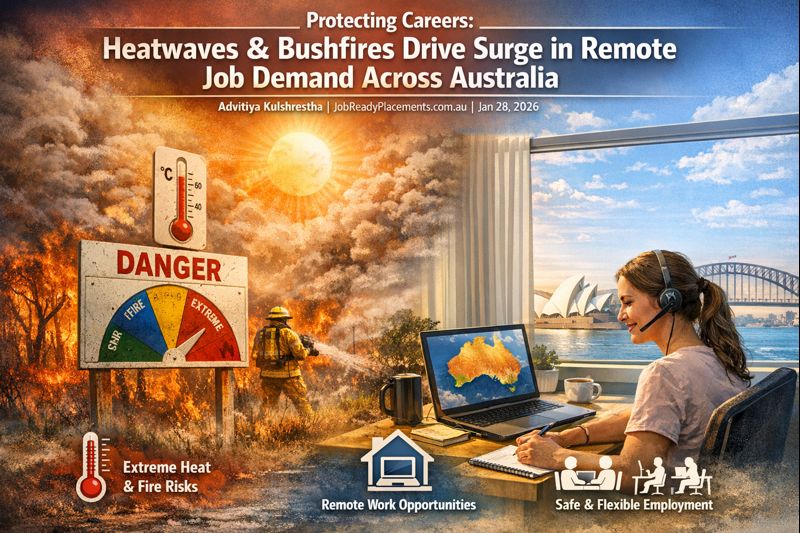
Protecting Careers: Heatwaves and Bushfires Drive Surge in Remote Job Demand Across Australia
Advitiya Kulshrestha | JobReadyPlacements.com.au |: Jan 29, 2026, 09:00 IST
As record‑breaking heat and emergency‑level bushfires sweep parts of Victoria and southeast Australia, another consequence is emerging beyond public safety concerns — a growing demand for remote work and flexible job opportunities.
Authorities have issued major heatwave and fire danger warnings as temperatures soar into the 40 °Cs, creating serious risks for workers commuting to and performing traditional onsite roles. WorkSafe Victoria is urging employers to adapt work arrangements and protect workers from heat-related hazards — including dehydration, heat exhaustion and heat stroke — by rescheduling physical tasks or allowing staff to work remotely where possible. (worksafe.vic.gov.au)
At the same time, comprehensive safety guidance from national bodies such as Safe Work Australia highlights the health and safety obligations of employers when workers are exposed to extreme heat or bushfire smoke. These conditions have reinforced the importance of reducing exposure to hazardous outdoor environments and prioritising flexible working conditions. (safeworkaustralia.gov.au)
Remote and Work‑From‑Home Roles on the Rise
In response to these evolving conditions, JobReady Placements is stepping up support for jobseekers by promoting remote and work‑from‑home roles that enable Australians to continue earning while avoiding dangerous travel and workplace conditions.
“During periods of extreme weather, continuing to work shouldn’t mean risking your health,” says a spokesperson for JobReady Placements. “We’re connecting candidates with trusted employers offering verified remote positions, so workers can stay safe during heatwaves and bushfire emergencies — without sacrificing employment continuity.”
Flexible work arrangements are not just a short‑term fix. Recent data shows that even outside emergency weather events, remote work is an increasingly common feature of the Australian labour market, with a rising share of job postings explicitly offering remote options. (hiringlab.org)
Why Remote Work Matters Now
Severe weather events disrupt traditional workplaces: Emergency warnings and high fire danger ratings can make travel unsafe or impossible, prompting employers to adapt through flexible options. (worksafe.vic.gov.au)
Worker health and safety is paramount: Health authorities emphasise that prolonged exposure to extreme heat can lead to serious conditions like heat stroke, especially for outdoor or physically demanding jobs. (worksafe.vic.gov.au)
Remote roles reduce risk and increase resilience: By promoting work‑from‑home and hybrid roles, platforms like JobReady Placements help workers stay productive even when environmental conditions are extreme.
Looking Ahead
With climate‑driven events like heatwaves and bushfires becoming more frequent, the Australian workplace is evolving rapidly. Employers who provide flexible work arrangements are not only protecting their workforce — they are also making their businesses more resilient in the face of climate risks.
For jobseekers across Australia looking for secure and flexible employment opportunities, JobReady Placements remains a key resource for discovering remote‑friendly roles tailored to modern workforce needs.
#RemoteWork #WorkFromHome #FlexibleJobs #JobReadyPlacements #CareerGrowth #AustraliaJobs #HeatwaveAustralia #BushfiresAustralia #WorkplaceSafety #JobOpportunities