Category: Jobseekers, Employers, Interview
How to Improve Resume Visibility and Attract More Recruiters
A strong resume can bring you closer to better job opportunities, but only if recruiters are actually able to find it. Many students, fresh graduates and job seekers create a resume, upload it on job portals and apply to different roles, yet still don't receive enough interview calls. This doesn't always mean they lack the right skills or qualifications. In most cases, the real issue is that their resume is not visible enough, not updated properly, or not written in a way that recruiters can quickly understand and act on.
Hiring today is far more digital and competitive than it used to be. Recruiters rely on job portals, candidate databases, applicant tracking systems and keyword-based searches to shortlist people. They search by job title, skill set, qualification, location, experience level or industry, and if your resume doesn't include the right details in a clear format, it simply won't show up in those searches. This is exactly why resume visibility deserves as much attention as resume content itself.
For students and early-career job seekers, visibility means making your profile easy to discover, easy to read and easy to match against the right openings. A good resume should clearly lay out your education, skills, training, internships, projects, achievements and career goals, without being generic or overloaded with unnecessary detail. It should let a recruiter understand your value within a matter of seconds.
What Is Resume Visibility?
Resume visibility refers to how easily recruiters can discover and shortlist your resume when they're searching for candidates. A visible resume has complete information, relevant keywords, updated skills, correct contact details and a simple, professional format. It isn't just about looking attractive on the page. It's about making sure the resume actually functions well within recruiter tools and hiring systems.
Most recruiters don't read every profile from start to finish. Instead, they apply filters and search terms to surface resumes that match a role. A recruiter hiring for an administration position, for example, might search for terms like office support, documentation, scheduling, customer service, data entry or Microsoft Excel. If these skills genuinely belong to your profile and appear clearly in your resume, your chances of turning up in that search improve significantly. This is why a resume should be written with the recruiter's search behaviour in mind, not just your own preferences.
Why Resume Visibility Matters
Competition is high across nearly every career field, and many candidates carry similar qualifications. What often separates one candidate from another is how clear, current and recruiter-friendly their resume is. Since recruiters usually spend only a short window scanning each profile, your information needs to be immediately understandable.
A visible resume can help you get more recruiter views, since including the right skills and updated details increases the chance of surfacing in searches. It can also improve your interview call rate, because a clear resume helps recruiters quickly assess your education, experience and direction. And it builds a stronger first impression, signalling that you're prepared and serious about the role.
For freshers particularly, this matters even more. With limited formal work experience, your resume has to lean on education, internships, academic projects, certifications and practical training to demonstrate that you're genuinely job-ready.
Keep Your Resume Updated
One of the simplest ways to boost visibility is to keep your resume current. A lot of candidates use the same version for months without a single change, which can make their profile look inactive to recruiters. Every time you complete a new course, certification, internship or project, add it in. If you pick up a new tool or strengthen a skill, update your skills section right away. And if your phone number, email or location changes, correct it immediately — recruiters shouldn't have to struggle to reach you.
An updated resume signals that you're actively working on your career, and employers naturally prefer candidates who are learning and staying prepared. For students, useful updates can include college projects, presentations, workshops, part-time roles or industry training — small experiences that still show responsibility, communication and practical learning.
Use the Right Keywords Naturally
Keywords are central to resume visibility, since recruiters search using specific terms tied to job roles, skills and tools. If those words are missing, your profile can be overlooked even when you're genuinely qualified. The best way to find the right ones is to read job descriptions closely and note which skills and responsibilities repeat across the roles you're targeting.
A candidate applying for customer service roles might include customer support, phone handling, email communication and complaint resolution. Someone applying for digital marketing could mention social media marketing, content creation, SEO and campaign support. For administration roles, terms like documentation, scheduling and office coordination fit naturally. That said, keywords should never be forced in — recruiters can usually spot when terms have been added just to game a search, so only include what you can genuinely speak to in an interview.
Write a Clear Resume Summary
The summary is typically the first section a recruiter reads, and a weak one can make your whole resume feel generic. Skip vague lines like "hardworking candidate looking for a good opportunity," since they tell recruiters nothing specific. Instead, mention your qualification, key skills and career direction directly. For instance: "Business graduate with strong communication, customer service and administration skills, with academic project experience in business operations and client support, seeking an entry-level role in daily operations." This kind of summary is simple, specific, and naturally includes keywords right at the top of the resume, where visibility matters most.
Make Your Resume Easy to Read
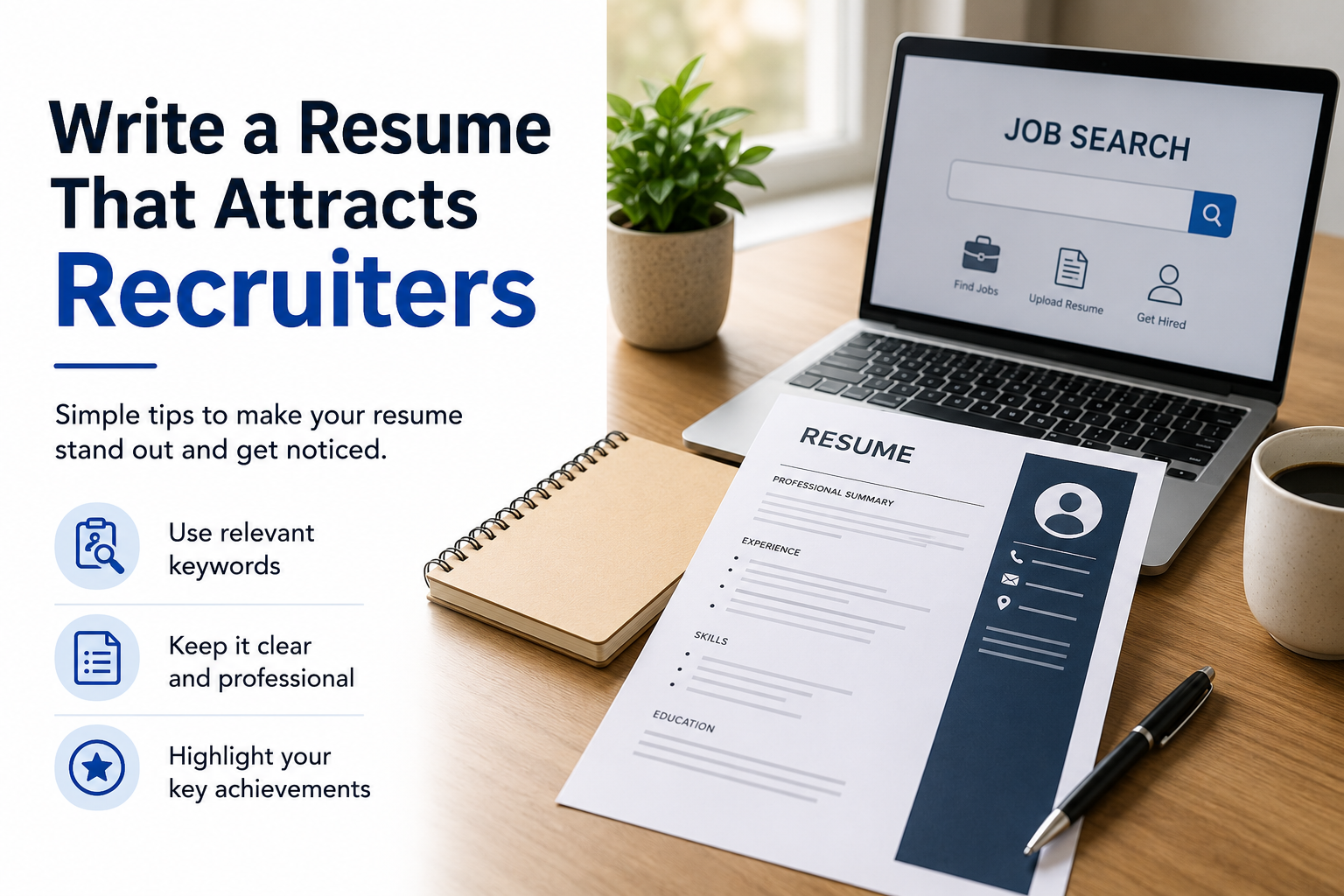
Simplicity beats decoration. Heavy use of colours, icons or complex tables can actually reduce readability, and some applicant tracking systems fail to parse overly designed formats correctly. Stick to clear headings — Summary, Skills, Education, Experience, Projects and Certifications — with short paragraphs and bullet points used only where they genuinely aid clarity. Recruiters should be able to locate your contact details, skills and experience in seconds.
Customise Your Resume and Highlight What You've Done
Sending an identical resume to every job is a common mistake. Small adjustments — highlighting documentation and coordination for admin roles, or communication and problem-solving for customer service roles — go a long way in matching both recruiter searches and job description keywords. Beyond listing what you studied, explain what you actually did: your role in a project, the tasks you handled during an internship, or the skills you built through college activities.
Before sending your resume, a few checks are worth doing every time:
- Confirm your phone number and email are correct and professional
- Review spelling, dates and job titles carefully for accuracy
- Keep the content focused on what supports your target role
Complete Your Online Job Profile
Visibility extends beyond the resume file itself. Recruiters often search candidate profiles directly on job portals, so an incomplete or outdated profile can cost you opportunities. Make sure your online profile reflects your latest education, skills, preferred role and location, and swap a vague headline like "Looking for job" for something specific, such as "Entry-Level Business Graduate | Administration | Customer Service."
How JobReady Placements Can Help
JobReady Placements works with students, fresh graduates and job seekers to build genuine career readiness, and a strong resume is a core part of that process. Many candidates already have the right skills — what they often lack is guidance on presenting them clearly. With the right support around resume building, interview preparation and job search strategy, candidates can move meaningfully closer to the roles they want.
Conclusion
Improving resume visibility is one of the most important steps in any successful job search. Your resume shouldn't just exist — it should actively work for you, staying easy to find, easy to read and easy to match with the roles you're pursuing. By keeping it updated, using keywords naturally, writing a strong summary, choosing a simple format and completing your online profile, you give recruiters every reason to notice you. For students and fresh graduates especially, a visible, well-prepared resume can open the door to far stronger career opportunities.