Category: Jobseekers, Employers, Interview
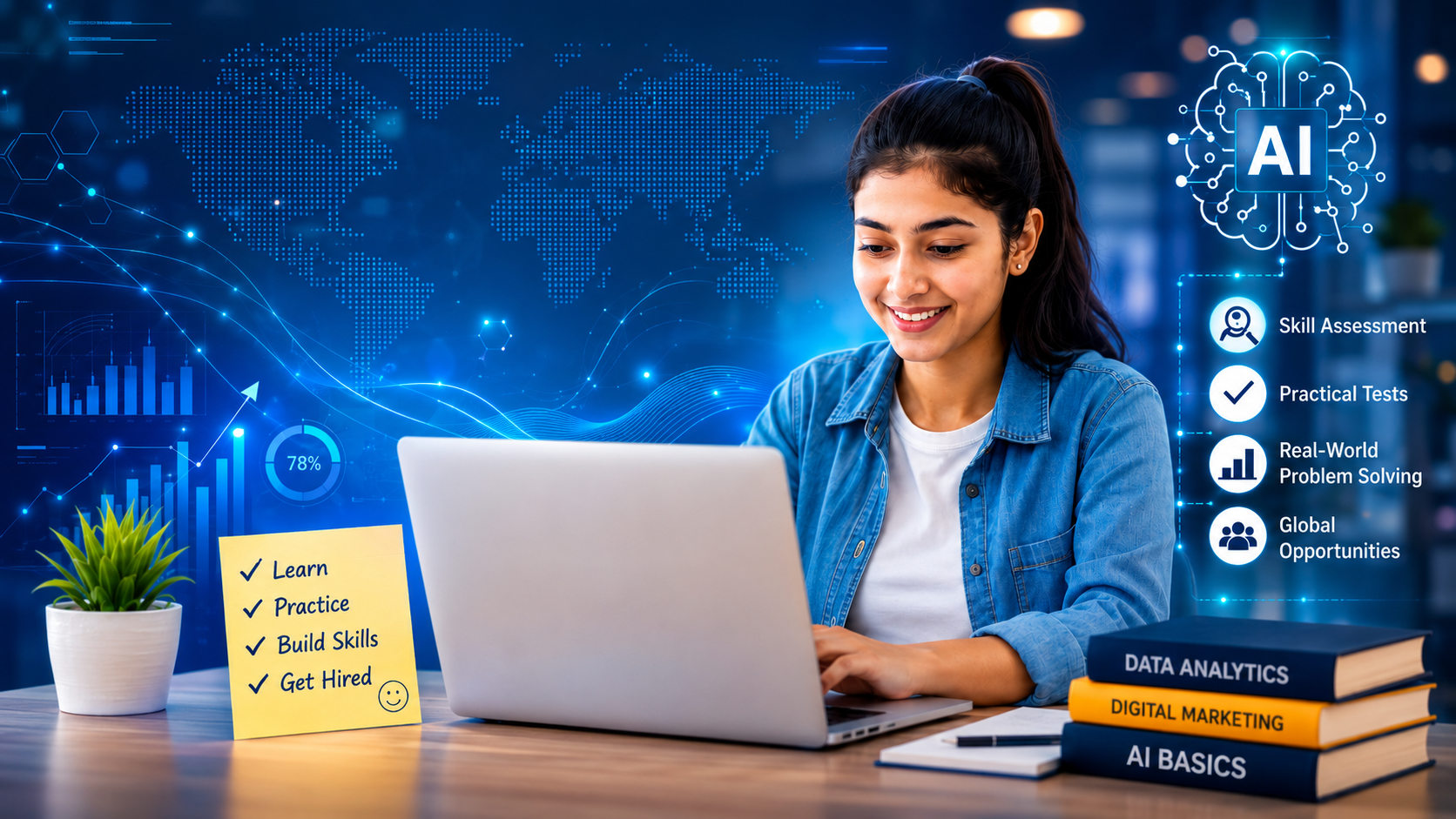
How AI and Skill-Based Hiring Are Changing Multinational Company Jobs
Published By Ava Mitchell | 20 June 2026 | 10:00 AM IST
The hiring world inside multinational companies looks very different today compared to a few years ago. Earlier, a strong degree and a polished resume were often enough to get noticed by recruiters. Now, artificial intelligence and skill-based hiring are changing the way global employers identify, evaluate and select candidates.
For students, fresh graduates and job seekers, this shift is important to understand. Companies are no longer looking only at what a candidate has studied. They are also checking what a candidate can actually do, how quickly they can learn, and whether they are ready to work in a modern business environment.
Why Multinational Companies Are Rethinking Hiring
Multinational companies work across different countries, industries and markets. Their hiring strategies must change quickly according to business needs, technology trends and global competition. As artificial intelligence becomes part of daily work, companies are rethinking what makes a candidate valuable.
Recruiters today are focusing more on practical ability. They want to know whether a candidate can use modern tools, solve real problems and adjust to new systems. This shift is mainly driven by automation, digital transformation and the growing need for employees who can learn quickly.
This does not mean degrees have lost their value. A good education still matters. However, a degree alone no longer guarantees employability. Employers now want proof of capability, not just proof of qualification.
What Is Skill-Based Hiring?
Skill-based hiring is a recruitment approach where companies give more importance to a candidate's actual abilities instead of relying only on formal qualifications. Instead of asking "What degree do you have?", recruiters increasingly ask "What skills can you bring to this role?"
This shows up in several ways:
- Job postings now mention specific tools, software and technical skills
- Many companies include practical assessments, online tests or work-based tasks during hiring
- Certifications, portfolios, internships and project experience are weighted more heavily
For multinational companies hiring across different countries, skill-based hiring also creates a fairer evaluation process. A practical test can show a candidate's ability more clearly than comparing degrees from different education systems.
How AI Is Reshaping the Hiring Process
AI is not only changing job roles; it is changing the hiring process itself. Many multinational companies now use AI-powered tools during recruitment to make screening faster and more efficient — scanning resumes, matching candidates to job requirements, scheduling interviews and supporting early-stage assessments.
For job seekers, this means resumes need to be clear, specific and keyword-friendly. If a resume does not mention relevant skills, tools or experience properly, it may not pass the first screening stage. A vague resume with general statements is far less effective in today's hiring process.
Candidates should focus on writing resumes that clearly show their skills, projects, certifications and achievements — making it easy for both AI systems and human recruiters to understand their value.
New Skills Multinational Employers Are Looking For
As AI becomes part of everyday work, multinational companies want candidates who can work confidently in a digital environment. These skills are not limited to technology jobs — they are useful in marketing, finance, HR, operations and customer service roles too.
- AI literacy – Candidates don't need to be experts, but should know how to use AI tools responsibly and productively
- Data interpretation – Reading reports, understanding dashboards and basic analytics is valuable even in non-technical roles
- Digital communication – Comfort with emails, virtual meetings and collaboration tools across global teams
- Adaptability – Willingness to learn new tools, systems and processes quickly
Does AI Mean Fewer Jobs for Graduates?
Many students worry that AI will reduce job opportunities. The reality is more balanced. AI is changing the nature of work more than removing jobs completely. Repetitive, rule-based tasks are more likely to be automated, but work requiring judgment, creativity, communication and problem-solving still needs human ability.
For graduates, the focus should not be on competing against AI but on learning to work with it. Candidates who use AI tools to improve productivity, research faster or support decision-making become more valuable to employers — and this applies to business, marketing and HR students just as much as technical ones.
How Students Can Prepare for This Shift
Students don't need to become technical experts to adapt. They need to build practical, demonstrable skills:
- Learn relevant AI basics – Marketing students can learn content and analytics tools; business students can learn Excel and reporting; IT students can focus on coding, cloud or cybersecurity basics
- Build a skills-first resume – Replace generic lines like "hardworking" with specific tools, projects and measurable achievements
- Get practical exposure – Internships, college projects, freelance work and real assignments prove applied ability
- Earn relevant certifications – Short courses in data analysis, digital marketing, AI tools or project management strengthen a profile quickly
- Practice explaining your work – Interviews increasingly focus on how candidates solve problems, not just what they studied
How Skill-Based Hiring Changes Interviews
Interviews at multinational companies are also becoming more practical. Recruiters ask fewer memorized questions and focus more on real examples — situational questions, case studies, role-based tasks and problem-solving discussions are now common.
Candidates may be asked how they would handle a workplace problem, how they completed a project, or how they stay updated with new skills. These questions test practical thinking, not textbook knowledge.
To prepare well, students should keep real examples ready — a project completed, a challenge handled, a tool learned. Clear examples make answers stronger and more believable. Confidence matters too: companies don't expect fresh graduates to know everything, but they do expect honesty, clarity and a willingness to learn.
Why This Shift Is an Opportunity
AI and skill-based hiring may sound challenging, but they also create new opportunities. Earlier, candidates from well-known institutions often had a stronger advantage. Today, practical skills, certifications, projects and portfolios help more candidates compete on equal footing.
A student from any background can build a strong profile by learning useful skills and showing real work. This rewards effort and preparation over pedigree alone — meaning students who prepare early can stand out even without a famous college name or years of experience.
Why JobReadyPlacements Matters for Students
Navigating these hiring changes can be confusing for students and fresh graduates. Many don't know what multinational companies expect, how to prepare a resume, or how to answer interview questions confidently.
JobReadyPlacements helps students understand the practical side of career preparation — not just finding job openings, but becoming ready for them. Resume building, interview preparation, skill awareness and career guidance help students present themselves better to employers and convert their potential into real employability.
Final Thoughts
AI and skill-based hiring are not temporary trends — they are becoming a long-term part of how multinational companies evaluate talent. Degrees still matter, but they are no longer the only deciding factor.
Students who focus on practical skills, AI awareness, communication, adaptability and interview preparation will be better positioned for future opportunities. The hiring process may be changing, but prepared candidates still have a strong chance to succeed. The companies of tomorrow are looking for capable, confident and job-ready individuals — and preparing early is now one of the clearest paths toward a successful multinational career.
Sources and References
PwC – 2026 Global AI Jobs Barometer
https://www.pwc.com/gx/en/services/ai/ai-jobs-barometer.html
Business Insider – The Global Chair of PwC Shares 3 Takes on What AI Means for Jobs
https://www.businessinsider.com/big-four-pwc-mohamed-kande-ai-impact-jobs-2026-6
LinkedIn – Global Talent Trends
https://business.linkedin.com/hire/global-talent-trends
World Economic Forum – How AI Is Changing the Nature of Entry-Level Work
https://www.weforum.org/stories/2026/03/how-ai-is-changing-the-nature-of-entry-level-work/
World Economic Forum – AI Has Already Added 1.3 Million Jobs, LinkedIn Data Says
https://www.weforum.org/stories/2026/01/ai-has-already-added-1-3-million-new-jobs-according-to-linkedin-data/
BCG – AI Will Reshape More Jobs Than It Replaces
https://www.bcg.com/publications/2026/ai-will-reshape-more-jobs-than-it-replaces
McKinsey – Superagency in the Workplace: Empowering People to Unlock AI’s Full Potential
https://www.mckinsey.com/capabilities/tech-and-ai/our-insights/superagency-in-the-workplace-empowering-people-to-unlock-ais-full-potential-at-work
Microsoft WorkLab – 2025: The Year the Frontier Firm Is Born
https://www.microsoft.com/en-us/worklab/work-trend-index/2025-the-year-the-frontier-firm-is-born
#JobReadyPlacements #AIHiring #SkillBasedHiring #MultinationalJobs #FutureOfWork #StudentCareers #FreshGraduateJobs #CareerReadiness #JobReadySkills #ResumeTips #InterviewPreparation #AIJobs #DigitalSkills #CareerGrowth #GlobalHiring #WorkplaceSkills #StudentSuccess #Employability #JobSearchTips #FutureCareers